Key points
- Every page is written by a named, qualified author.
- Information comes from clinical guidelines, published research and Malaysian data.
- Each page lists its sources, and numbers in the text link to them.
- Benefits and limitations are given equal weight, with no promotion of any service.
What we aim for
- Accurate: based on the best available evidence.
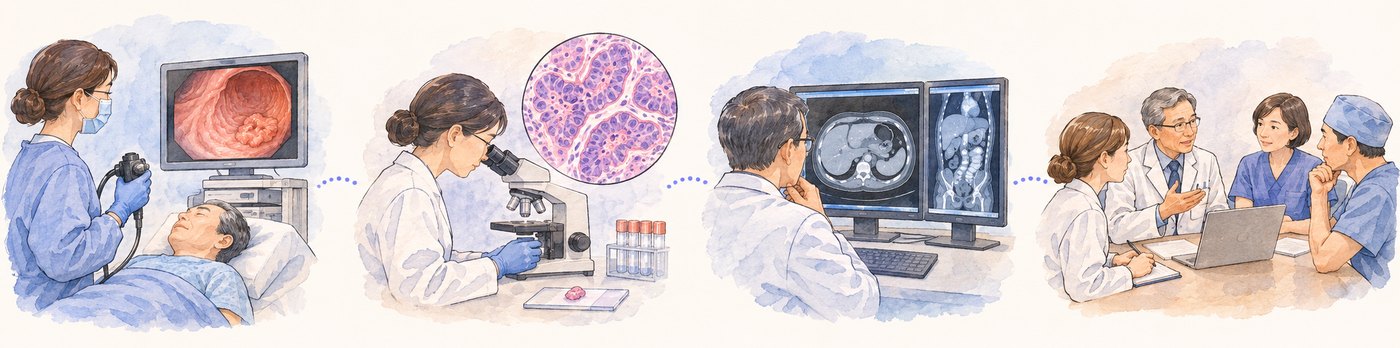
- Clear: everyday words, short sentences, and pictures that explain.
- Balanced: what is known, what is uncertain, and the pros and cons of each option.
- Useful for Malaysia: local data, local food examples and local context where possible.
Where the information comes from
We use, in this order:
- International clinical practice guidelines, such as those from the European Society for Medical Oncology and the Japanese Gastric Cancer Association
- Systematic reviews and randomised controlled trials published in peer-reviewed medical journals
- Malaysian data, such as the Malaysia National Cancer Registry and studies of Malaysian patients
- Trusted patient information from national cancer organisations
Each page ends with a numbered list of its sources. A small number in the text, like this13, links to the source it comes from. The full list is on the References page.
How pages are written
- Each page starts with a short "In short" answer and a few key points.
- Main text uses simple words. Medical terms are explained the first time they appear.
- Deeper detail, numbers and study results sit inside "Want more detail?" boxes, so the main page stays easy to read.
- When studies disagree or evidence is weak, we say so.
- Survival and other numbers are explained with their limits, because averages cannot predict what happens to one person.
Independence
- No funding, no sponsorship and no advertising.
- No promotion of any doctor, hospital, clinic, product or service, and no patient testimonials.
- Medicines and surgical methods are described by what they are and what the evidence shows, never as "the best".
Keeping pages up to date
Cancer care changes as new research is published. Pages are updated when important new evidence or new guidelines appear.
References
- Al-Batran SE, et al. Gastric and oesophageal cancer: ESMO Clinical Practice Guideline for diagnosis, treatment and follow-up. Ann Oncol 2026 (published online October 2026). doi:10.1016/j.annonc.2026.09.015
For general education only. Not a substitute for consultation with a qualified doctor. Not a diagnosis or treatment advice.
If you have urgent symptoms such as vomiting blood, black tarry stools, severe tummy pain, fainting or difficulty breathing, go to the nearest emergency department or call 999.