Key points
- A risk factor makes a disease more likely. It does not mean you will get it.
- The biggest known risk factor is a stomach germ called Helicobacter pylori (H. pylori).
- H. pylori can be found with a simple test and treated with a course of tablets.
- Malaysia does not have a national screening programme for stomach cancer. People at higher risk should talk to a doctor about check up.
What causes stomach cancer? Things that raise the risk
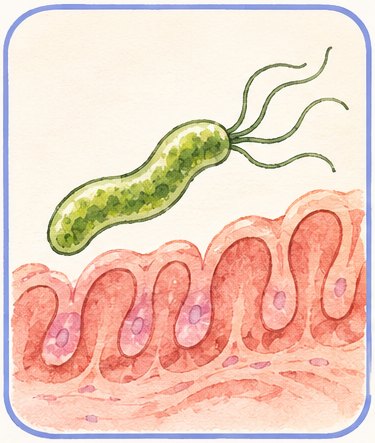 H. pylori infection.A germ that can live in the stomach lining for years and cause long-lasting irritation9.
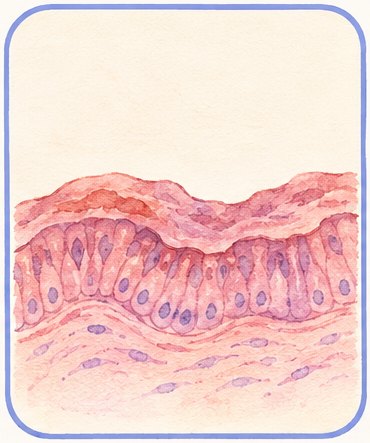 Long-term stomach lining changessuch as thinning of the lining (atrophic gastritis) or intestinal metaplasia.
 Smoking.
 A lot of salty, salted or preserved food10.
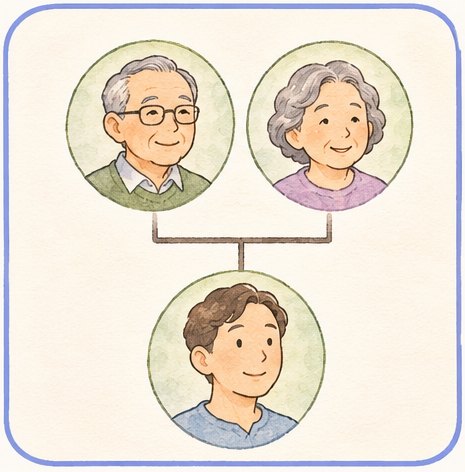 Close family members with stomach cancer.
 Getting older.Stomach cancer is more common in older adults.
 Rare inherited gene changessuch as in a gene called CDH111.
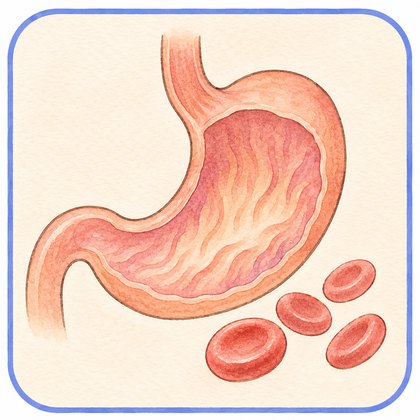 Some long-standing stomach conditionssuch as pernicious anaemia.
Some people with stomach cancer have none of these. And most people with these risk factors never get stomach cancer.
What is H. pylori, and does it cause stomach cancer?

Should I be tested?
Talk to a doctor if you have ongoing stomach symptoms, a stomach ulcer, or a close relative with stomach cancer. The test may be a breath test, a stool test, or a sample taken during endoscopy.
If I have it, will I get cancer?
The infection can raise the risk, but having it does not mean you will get cancer. A doctor can advise whether treatment is right for you.
If it is treated, is my risk zero?
No, but it is lower. Your risk still depends on your age, family history and any changes already in your stomach lining.
Should my family be tested?
This depends on symptoms and family history. Ask a qualified doctor.
How can I lower my risk of stomach cancer?
- Do not smoke.
- Go easy on salt and on salted, pickled and preserved foods.
- Eat plenty of fresh vegetables and fruit.
- See a doctor if you have persistent or recurring stomach symptoms.
- If you have H. pylori, finish the full course of treatment and do the follow-up test.
Is there stomach cancer screening in Malaysia?
Screening means testing people who feel well. Japan and South Korea screen for stomach cancer because it is very common there. Malaysia does not have a national programme. A doctor may still advise regular endoscopy for people at higher risk, such as those with known lining changes or a strong family history.
Is stomach cancer hereditary?
Most stomach cancers are not inherited. A small number are linked to a gene change passed down in families. Genetic counselling may help if:
- Stomach cancer was found at a young age
- Several close relatives have had stomach cancer
- A relative had the "diffuse" type of stomach cancer, or lobular breast cancer, along with a family history
Genetic counselling comes before and after any gene test, because results can affect the whole family.
Want more detail?
- In a pooled analysis of 10 randomised trials, treating H. pylori in healthy adults lowered the number who later developed stomach cancer by about half (relative risk 0.54) and lowered deaths from stomach cancer (relative risk 0.61). Most of the trials were in East Asia7.
- In a Korean trial of people with H. pylori who had a parent or sibling with stomach cancer, treatment lowered the risk of stomach cancer (1.2% versus 2.7% over about nine years)8.
- International experts class H. pylori as the main cause of stomach cancer and advise treating it when found9.
- In a pooled analysis of prospective studies, high salt intake was linked to a 68% higher risk of stomach cancer than low salt intake10.
- In South Korea's national programme, people screened by endoscopy were about half as likely to die of stomach cancer as people never screened (odds ratio 0.53). This was an observational study, not a randomised trial12.
- Hereditary diffuse gastric cancer is most often caused by changes in the CDH1 gene, and less often CTNNA1. International guidelines discuss preventive removal of the stomach or careful endoscopic surveillance in expert centres for people who carry these changes11.
Common questions
Is stomach cancer inherited?
Usually not. A small number of families carry a gene change that raises the risk. See the Risk factors page.
Is stomach cancer the same as "gastric"?
In Malaysia, people say "gastric" for stomach pain or indigestion. Doctors use "gastric cancer" to mean stomach cancer. Ordinary gastric pain is very common and is usually not cancer.
References
- Ford AC, et al. Helicobacter pylori eradication therapy to prevent gastric cancer: systematic review and meta-analysis. Gut 2020;69(12):2113–2121. doi:10.1136/gutjnl-2020-320839
- Choi IJ, et al. Family history of gastric cancer and Helicobacter pylori treatment. N Engl J Med 2020;382(5):427–436. doi:10.1056/NEJMoa1909666
- Malfertheiner P, et al. Management of Helicobacter pylori infection: the Maastricht VI/Florence consensus report. Gut 2022;71(9):1724–1762. doi:10.1136/gutjnl-2022-327745
- D'Elia L, et al. Habitual salt intake and risk of gastric cancer: a meta-analysis of prospective studies. Clin Nutr 2012;31(4):489–498. doi:10.1016/j.clnu.2012.01.003
- Blair VR, et al. Hereditary diffuse gastric cancer: updated clinical practice guidelines. Lancet Oncol 2020;21(8):e386–e397. doi:10.1016/S1470-2045(20)30219-9
- Jun JK, et al. Effectiveness of the Korean National Cancer Screening Program in reducing gastric cancer mortality. Gastroenterology 2017;152(6):1319–1328. doi:10.1053/j.gastro.2017.01.029
For general education only. Not a substitute for consultation with a qualified doctor. Not a diagnosis or treatment advice.
If you have urgent symptoms such as vomiting blood, black tarry stools, severe tummy pain, fainting or difficulty breathing, go to the nearest emergency department or call 999.