
Key points
- Surgery removes the part of the stomach with the cancer, plus nearby lymph nodes.
- You can live without part, or even all, of your stomach. Eating changes, and the body adapts over time.
- Surgery can be done through one longer cut (open), through small cuts with a camera (keyhole), or with a surgeon-controlled robot.
- Studies so far show similar cancer results for these methods. Each has pros and cons.
- All major surgery carries risks. Your surgeon will explain the risks that apply to you.
What are the types of stomach cancer surgery?
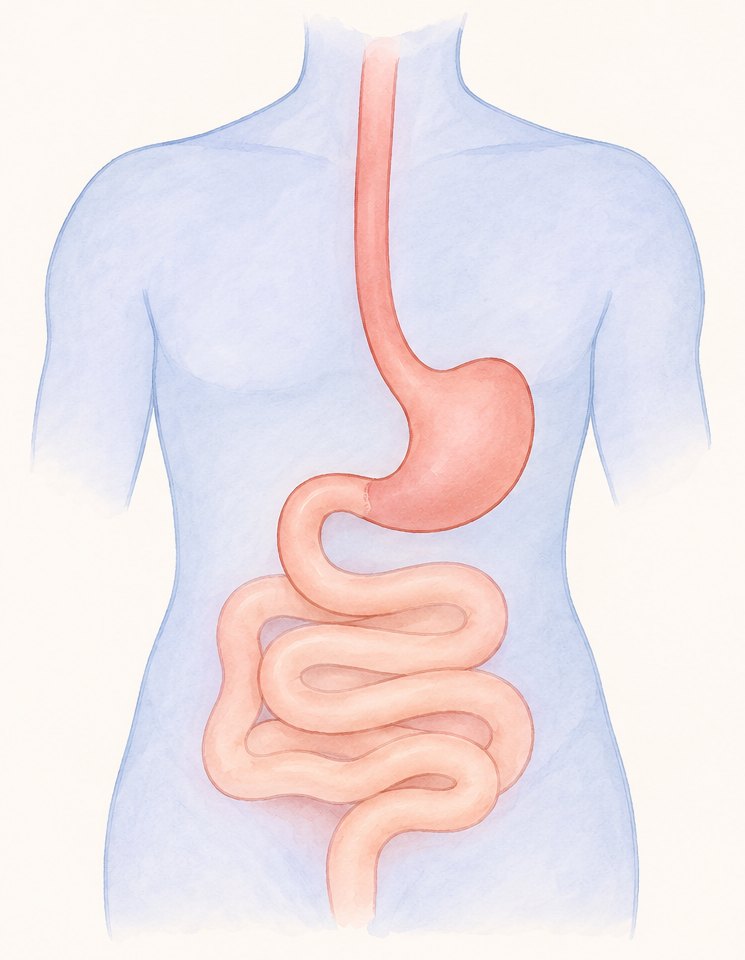
Partial (subtotal or distal) gastrectomy
- What is removed
- The lower part of the stomach
- How food travels afterwards
- The remaining stomach is joined to the small gut
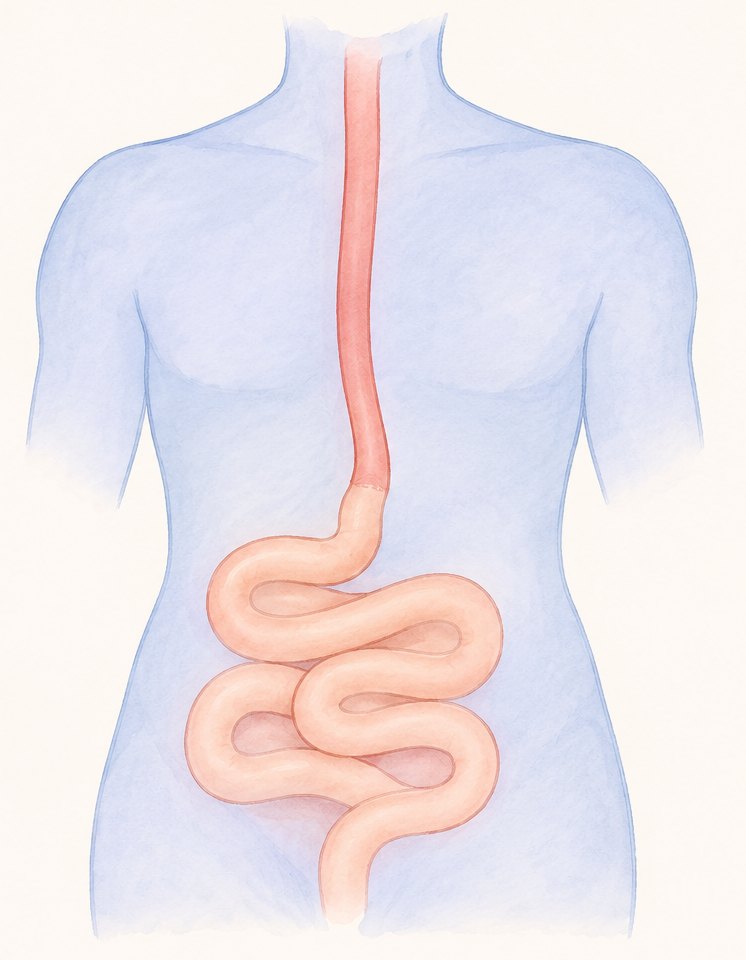
Total gastrectomy
- What is removed
- The whole stomach
- How food travels afterwards
- The food pipe is joined straight to the small gut
Why are lymph nodes removed? Cancer cells can travel to nearby lymph nodes. Removing them takes away cancer that may be hiding there and tells doctors the true stage. A thorough removal of the lymph nodes around the stomach is called a D2 dissection.
Want more detail? (Lymph node removal)
In a Dutch trial followed for 15 years, D2 dissection led to fewer deaths from stomach cancer than the more limited D1 dissection, but more complications and deaths around the time of surgery in that era. The authors concluded that D2, done with a safer spleen-preserving technique in experienced centres, is the recommended approach31. Current guidelines recommend D2 for cancers that can be removed13, 14.
Open, keyhole or robotic: three ways to do the operation
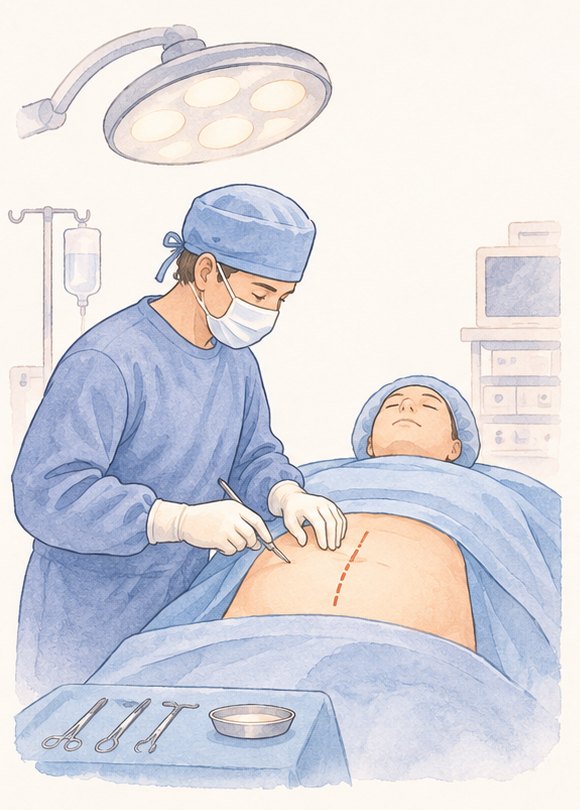
Open
One longer cut in the upper tummy
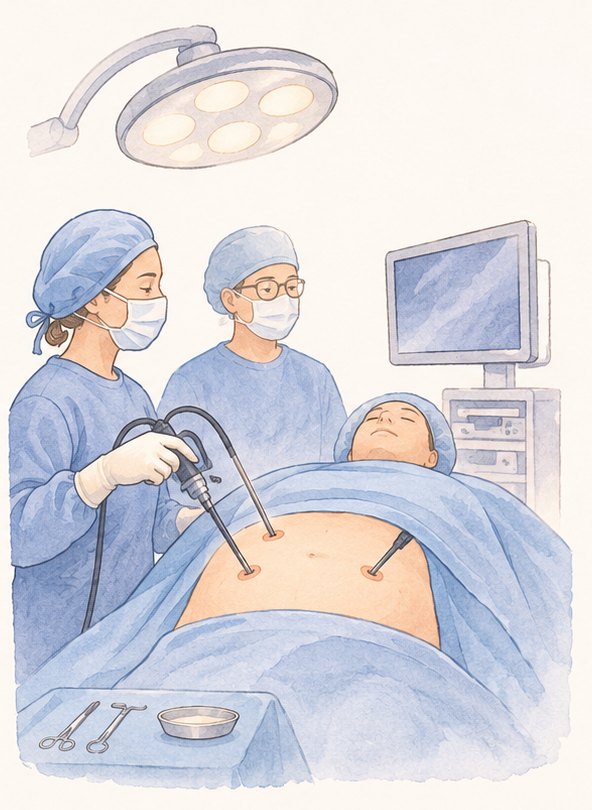
Keyhole (laparoscopic)
Several small cuts. The surgeon uses a camera and long, thin tools
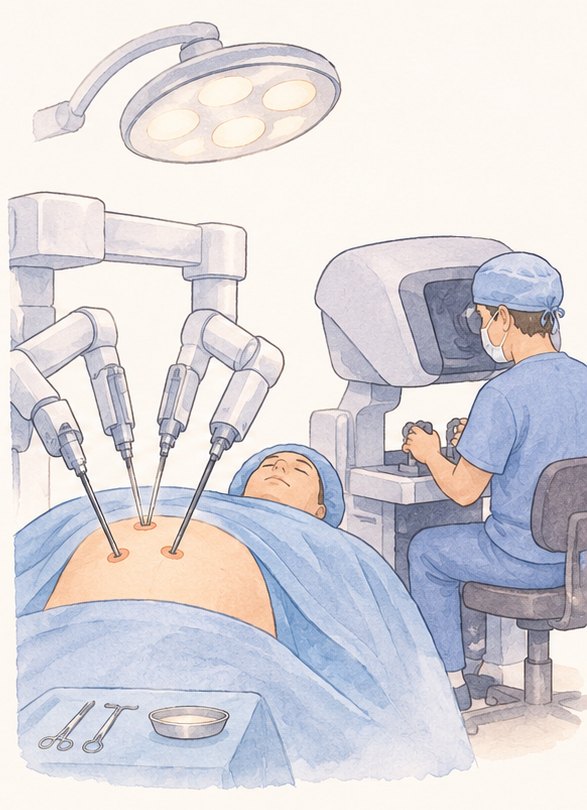
Robotic
Small cuts, as with keyhole. The surgeon sits at a console and controls robotic arms that hold the camera and tools. The robot does not operate by itself
The right method depends on the tumour, your body and health, and the surgeon's training and experience with each method. No method suits everyone.
Want more detail? (Open versus keyhole)
- For stage 1 cancer in the lower stomach, a Korean trial (KLASS-01) found five-year survival was similar after keyhole and open surgery32.
- For locally advanced cancer in the lower stomach, a Chinese trial (CLASS-01) found five-year survival was similar (72.6% keyhole, 76.3% open; the difference was not statistically significant)33.
- A pooled analysis of two trials found similar long-term results overall, but advised caution for tumours that have grown through the outer stomach wall (T4)34.
- These trials were done by experienced surgeons in hospitals that perform many of these operations. Evidence for keyhole total gastrectomy is less mature.
Want more detail? (Robotic versus keyhole: a balanced look at the evidence)
| Question | What studies show | How sure are we? |
|---|---|---|
| Complications | A pooled analysis of four randomised trials (919 people) found fewer complications overall with robotic surgery. Serious complications, leaks and repeat operations were similar38 | Low to very low certainty |
| Hospital stay | About one day shorter with robotic surgery38 | Moderate certainty |
| Operating time | About 17 minutes longer with robotic surgery38 | Consistent across trials |
| Lymph nodes removed and blood loss | Similar in the pooled analysis38. One trial found more lymph nodes outside the stomach area removed with the robot35 | Mixed |
| Long-term cancer results | A Japanese trial found no significant difference in five-year survival (overall survival 79% robotic, 71% keyhole)37. A Chinese trial reported better three-year disease-free survival with robotic surgery (85.8% versus 73.2%)36 | Limited. The Japanese trial's main question was complications, not survival, and the Chinese trial was a mid-sized phase 2 trial |
| Cost | Higher total hospital cost with robotic surgery in the trial that measured it35 | Depends on the country and hospital |
What this means: robotic surgery is a reasonable option in trained hands. Current evidence suggests somewhat smoother short-term recovery, a longer operation and higher cost, with no proven difference in long-term cure. All of the randomised trials come from high-volume centres in East Asia, so results may differ elsewhere38. In every trial, the surgeons were experienced in the method they used.
What are the possible problems after stomach surgery?
Like all major operations, stomach surgery can have complications. They include bleeding, infection, chest infection, blood clots, a leak where the gut was joined, slow emptying of the remaining stomach, and sometimes the need for another procedure. Longer-term effects include weight loss, low vitamin levels and dumping syndrome (see the Eating page).
What is recovery like after stomach surgery?
- You will be helped to get out of bed and walk early, when it is safe.
- Drinks and food are restarted step by step.
- Weight loss is common in the first months.
- Going back to work depends on your operation, your job and any further treatment.
- Drive only when you can do an emergency stop safely and are no longer taking medicines that make you drowsy.
- Follow your own surgeon's advice about lifting.
After you go home: get urgent help if you have
- Severe or worsening tummy or chest pain
- Fever that does not settle, or feeling suddenly very unwell
- Shortness of breath
- Vomiting again and again, or you cannot keep fluids down
- Bleeding
- A tummy that swells quickly
- Collapse, fainting or severe weakness
Use the emergency contact instructions your own surgical team gave you, or go to the nearest emergency department.
Common questions
Will I need my whole stomach removed?
Not always. It depends on where the tumour is and what type it is. Some people need only part removed.
Is robotic surgery better?
Studies so far show similar cancer results to keyhole surgery, with some differences in recovery, operating time and cost. See the Surgery page.
Can I eat normally after surgery?
Most people return to a varied diet, but in smaller, more frequent meals. It takes time to adjust.
References
- Al-Batran SE, et al. Gastric and oesophageal cancer: ESMO Clinical Practice Guideline for diagnosis, treatment and follow-up. Ann Oncol 2026 (published online October 2026). doi:10.1016/j.annonc.2026.09.015
- Japanese Gastric Cancer Association. Japanese gastric cancer treatment guidelines 2025 (7th edition). Gastric Cancer 2026;29(2):271–299. doi:10.1007/s10120-025-01698-4
- Songun I, et al. Surgical treatment of gastric cancer: 15-year follow-up results of the randomised nationwide Dutch D1D2 trial. Lancet Oncol 2010;11(5):439–449. doi:10.1016/S1470-2045(10)70070-X
- Kim HH, et al. Effect of laparoscopic distal gastrectomy vs open distal gastrectomy on long-term survival among patients with stage I gastric cancer: the KLASS-01 randomized clinical trial. JAMA Oncol 2019;5(4):506–513. doi:10.1001/jamaoncol.2018.6727
- Huang C, et al. Laparoscopic vs open distal gastrectomy for locally advanced gastric cancer: five-year outcomes from the CLASS-01 randomized clinical trial. JAMA Surg 2022;157(1):9–17. doi:10.1001/jamasurg.2021.5104
- Hu, et al. Long-term outcomes of laparoscopic distal gastrectomy for locally advanced gastric cancer: an individual patient data meta-analysis of KLASS-02 and CLASS-01 randomized controlled trials. Chin J Cancer Res 2025;37(3):365–376. doi:10.21147/j.issn.1000-9604.2025.03.06
- Lu J, et al. Assessment of robotic versus laparoscopic distal gastrectomy for gastric cancer: a randomized controlled trial. Ann Surg 2021;273(5):858–867. doi:10.1097/SLA.0000000000004466
- Lu J, et al. Robotic versus laparoscopic distal gastrectomy for resectable gastric cancer: a randomized phase 2 trial. Nat Commun 2024;15(1):4668. doi:10.1038/s41467-024-49013-6
- Kitadani, et al. Robotic versus laparoscopic gastrectomy for gastric cancer: 5-year long-term results from a randomized controlled trial. Gastric Cancer 2026 (published online). doi:10.1007/s10120-026-01813-z
- Mirza, et al. Robotic versus laparoscopic gastrectomy for gastric cancer: a GRADE-assessed systematic review and meta-analysis of randomized controlled trials. J Robot Surg 2025;19(1):646. doi:10.1007/s11701-025-02842-z
For general education only. Not a substitute for consultation with a qualified doctor. Not a diagnosis or treatment advice.
If you have urgent symptoms such as vomiting blood, black tarry stools, severe tummy pain, fainting or difficulty breathing, go to the nearest emergency department or call 999.